
The SC ordered a halt to preparations for snap elections on January 5.

Over 15 million voters are eligible to vote in the election being held under electoral districts-based proportional representation system.

After nearly two days of political deadlock, the stakeholders are engaged in prolonged talks to try and appoint a successor to Mahinda Rajapaksa.
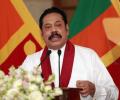
Rajapaksa was appointed as the premier on October 26 by President Maithripala Sirisena after sacking Ranil Wickremesinghe, plunging the nation into a constitutional crisis.

Rulers in New Delhi and their political aides in sensitive states like Tamil Nadu have to be doubly careful not to provoke a situation whose consequences may be much more than visible now to the naked eye, notes N Sathiya Moorthy.

The SLPP, led by prime minister Mahinda Rajapaksa, has won in 145 constituencies, bagging a total of 150 seats with its allies, a two-thirds majority in the 225-member Parliament, according to the results announced by the election commission.

Maithripala Sirisena was considered so meek and self-effacing that he appeared no threat to anyone. What a mistake his rivals made!
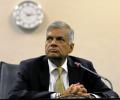
In a Sri Lankan House of 225 members, the cut-off figure comes to 113. With Wickremesinghe side touching 102 and Rajapaksa's team at 101, the three-party Tamil National Alliance with 16 members and the left-leaning Sinhala-Buddhist nationalist Janatha Vimukthi Peramuna with 6 members hold the key. But with the latter declaring that they will not support either formation in a vote count,that leaves the TNA as the deciding factor, says N Sathiya Moorthy.

Unofficial results indicate that the SLPP would comfortably win at least 17 out of the 22 districts on offer.

Mahinda Rajapaksa recovered from his 2015 electoral losses, went to the people and campaigned about the injustice done to him. Without attempting to be subtle, he underscored his image of the Sinhala Buddhist warrior a la Dutugemunu, the king of Sri Lanka (164 BC to 140 BC) who led the military campaign against the invading warlord Elara.

Maithripala Sirisena, the Sri Lankan president-elect, will be sworn-in on Friday evening following his stunning victory in the tightest-ever presidential race that ended the 10-year-rule of Mahinda Rajapaksa.

Prime Minister Narendra Modi congratulated Rajapaksa and said he looks forward to further deepen relations between the two nations.
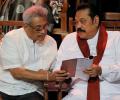
President Rajapaksa and Prime Minister Rajapaksa will transform Sri Lanka's political landscape after Thursday's electoral triumph, predicts N Sathiya Moorthy, veteran Colombo watcher.

Even as the polity find ways and means to address the genuine concerns and fears of the society, the Sri Lankan State apparatus would have to unravel these mystery-questions with convincing answers, and a road-map to the future, says N Sathiya Moorthy.
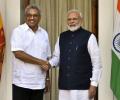
New Delhi is approaching Gota with an open mind, observes N Sathiya Moorthy.

The 74-year-old leader, who describe himself as "a rebel with a cause", earlier served as the country's president from 2005-2015, becoming South Asia's longest-serving leader. He was also prime minister for a brief period in 2018.

The country has a fiendishly complicated electoral system that is a combination of population-based proportional representation and party-based national lists, says Aditi Phadnis

Mahinda Rajapaksa completed 50 years of parliamentary politics in July this year. He was elected as a Member of Parliament at the young age of 24 in 1970. He has since been elected president twice and has been appointed prime minister thrice.

From Sri Lanka's most popular political family to its most despised -- going by the voices on the streets calling for the Rajapaksas' ouster -- what went wrong for the clan? Veteran Sri Lanka watcher N Sathiya Moorthy offers an insight.

Unlike in the presidential polls, victory might not have been complete, at least as yet, for Mahinda Rajapaksa's electoral rivals. While his one-time aide and confidant, Maithripala Sirisena, became president without any issues after defeating him, incumbent Prime Minister Ranil Wickremesinghe, who again may not command an absolute majority in the 225-member parliament, would have to count on his 'national government' concept to carry the day and the nation with him, this time round, says N Sathiya Moorthy.

Colombo's enduring interests suggest the relationship between the Sri Lanka and China will only strengthen, says Nitin Pai.
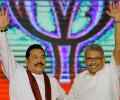
Delhi finds itself between the rock and hard place in the coming Sri Lankan election, points out Ambassador M K Bhadrakumar.

Polls opened at 7 am local time and would close at 5 pm with some 12,845 polling stations being set up throughout the country for 15.9 million voters, who will choose a successor to President Maithripala Sirisina.

Sri Lanka's newly elected president Mithripala Sirisena waves at media as he leaves the election commission in Colombo. Photograph: Dinuka Liyanawatte/ Reuters

A double-quick analysis of the Lankan election results would show that the relatively narrow victory margin of challenger Maithripala Sirisena was made up by the three minority communities of Tamils, Muslims and Christians, says N Sathiya Moorthy.

Authorities also released photographs of six suspects, including three women, wanted for their involvement in the attacks and sought information regarding them from the public.

Ending months of speculation, Sri Lanka's vanquished former president Mahinda Rajapaksa on Wednesday announced his return to electoral politics, saying he will lead an opposition faction during the general elections in August.
'We have nothing to gain by helping any other country to become a threat to India,' former Sri Lanka president Mahinda Rajapaksa, who is on the comeback trail, tells Rediff.com in an exclusive interview.

-- Seven suicide bombers believed to be members of an Islamist extremist group carried out the series of explosions. -- Police have so far arrested 24 people - mostly members of an Islamist extremist group - in connection with the blasts
